
⏱ 6 min read
Standing in front of a wall of nail products, it is easy to feel paralyzed by the three big options competing for your attention: traditional polish, gel, and dip powder. Each promises something slightly different, and each comes with trade-offs that nobody mentions until you are halfway through a bottle. This guide breaks down how the three systems actually work, how long they really last, and which one makes sense for your nails, your budget, and your patience.
How Each System Actually Works
Before you can choose, it helps to understand what you are putting on your nails. These three methods are not just different brands of the same thing. They cure, bond, and come off in fundamentally different ways.
Regular polish
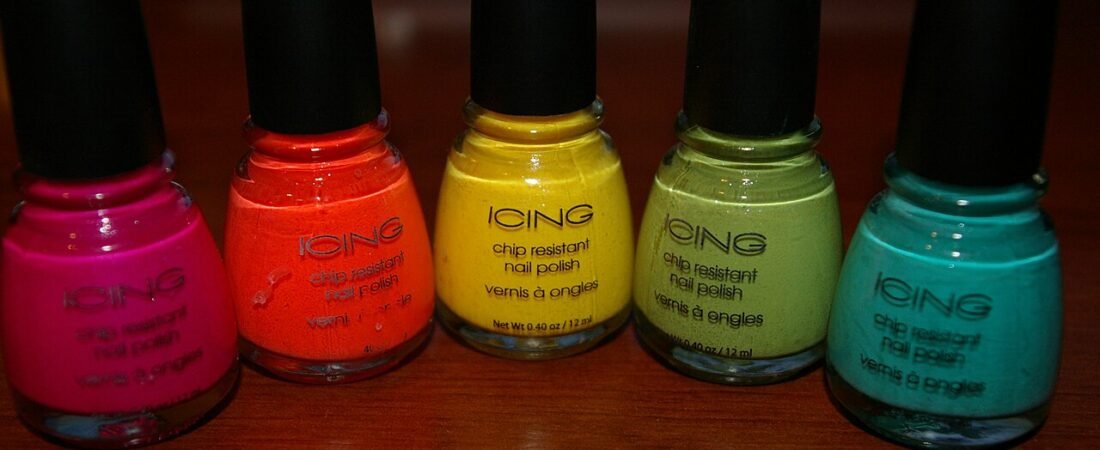
Traditional lacquer is a pigmented solution suspended in solvents. You brush it on, and it hardens as those solvents evaporate into the air. That is why it stays workable for a minute after application and why thin coats dry faster than thick ones. Nothing special is needed to “set” it beyond time and patience.
Gel polish
Gel looks like regular polish in the bottle but behaves completely differently. It will not dry on its own. Instead, each coat must be cured under a UV or LED lamp, which triggers a chemical reaction (photopolymerization) that hardens the layer into a durable, glossy film. No lamp means no cure, and the product stays tacky indefinitely.
Dip powder
Dip is a hybrid. You paint on a resin-style base, then either dip the nail into a colored acrylic powder or sprinkle the powder over it. An activator and sealant harden everything into a thick, protective shell. There is no lamp involved, and the finish sits somewhere between gel and acrylic in terms of strength and thickness.
Wear Time and Durability
This is usually the deciding factor, so let’s be honest about what each delivers in real life rather than in marketing copy.
- Regular polish: Two to four days before visible chipping is typical for most people, though a quality top coat and careful habits can stretch that. It is the least durable of the three by a wide margin.
- Gel polish: Two to three weeks of chip-free wear is realistic when applied correctly and sealed at the edges. The glossy finish tends to hold up well right until removal.
- Dip powder: Often three to four weeks, and many people find it the longest-lasting option because the powder builds a thicker, harder layer that resists chipping and cracking.
A note on durability versus flexibility: dip and gel are both hard, but hardness is not the same as nail health. A very rigid coating can sometimes transfer shock to the natural nail if you bang your hand, so “strongest” does not always mean “best for your nails.”
Removal: The Part Nobody Enjoys
How a product comes off matters as much as how it goes on, because bad removal is where most nail damage happens.
Regular polish
The easiest by far. A cotton pad and acetone-based or acetone-free remover wipes it away in seconds with no soaking required. This is the gentlest removal process of the three.
Gel polish
Gel needs to be soaked off. You lightly buff the shiny top layer, wrap each nail in acetone-soaked cotton and foil for roughly ten to fifteen minutes, then gently push the softened product off. The cardinal sin is peeling or prying gel off while it is still stuck, which rips away layers of your natural nail.
Dip powder
Dip removal is similar to gel but usually takes longer because the layer is thicker. Expect fifteen to twenty minutes of soaking, sometimes with a mid-process buff. Patience is essential here too; forcing it off causes the most damage.
The single biggest cause of thin, damaged nails is not the product itself but rushing removal. Whatever system you pick, never peel.
Cost, Skill, and Convenience
Each option asks something different of your time, your wallet, and your skill level.
Upfront investment
- Regular polish requires almost nothing beyond the polish, a base coat, a top coat, and remover. The cheapest entry point.
- Gel requires a UV or LED lamp, which is the main upfront cost, plus gel-specific base, color, and top coats and a cleanser for the tacky layer.
- Dip needs a starter kit of base, activator, sealant, and powders, but no lamp. The per-use cost can be low once you own the system.
Learning curve
Regular polish is forgiving because you can wipe mistakes and redo them. Gel is moderately tricky; flooding the cuticle or skipping the edge seal leads to peeling. Dip has the steepest learning curve for application evenness, and at a salon, shared dip jars raise hygiene concerns, so pouring powder over the nail instead of dipping directly is the more sanitary practice.
Which One Is Right for You?
There is no universal winner, only a best match for your situation. Use these quick profiles to narrow it down.
- Choose regular polish if you change colors frequently, want the gentlest option, travel light, or paint your nails as a quick mood-based treat.
- Choose gel if you want a glossy, salon-smooth finish that lasts a couple of weeks and you do not mind owning a lamp and soaking it off.
- Choose dip if you want maximum longevity and added strength for naturally weak or peeling nails, and you are comfortable with a longer removal.
Many people rotate: regular polish for a quick weekend look, gel or dip before a vacation or event when they do not want to think about touch-ups. There is nothing wrong with keeping more than one system in your kit.
Keeping Your Natural Nails Healthy With Any Method
No matter which route you take, a few habits protect your nails underneath.
- Give your nails an occasional break between long-wear applications so you can monitor their condition.
- Apply cuticle oil daily, even over gel or dip, to keep the surrounding skin and nail plate conditioned.
- Never peel or pick at any product; always remove it properly.
- Avoid over-buffing the natural nail surface during prep, which thins the plate over time.
Frequently Asked Questions
Is dip powder healthier than gel?
Not inherently. Both can be perfectly fine or damaging depending on application and removal. The real difference is in longevity and thickness, not nail health. Gentle, proper removal matters far more than which product you chose.
Can I apply gel polish without a lamp?
No. True gel polish will not harden without UV or LED light. If a product air-dries, it is a lacquer or a “gel-effect” polish, not a real gel system. Do not skip the lamp.
Which lasts the longest?
Dip powder usually wins on raw longevity, often reaching three to four weeks, with gel close behind at two to three weeks. Regular polish trails well behind at a few days.
Conclusion
The best system is the one that fits how you actually live. If you love variety and simplicity, regular polish is your friend. If you want a durable, glossy finish for a couple of weeks, gel delivers. If longevity and added strength top your list, dip powder earns its reputation. Whichever you choose, treat the removal step with the same care you give the application, and your natural nails will stay healthy underneath whatever finish you are wearing.